Our Choices
Every Choice Had a Reason.
Here’s what we chose — and why.
The more we knew about textiles, the more questions we asked.
What fibre should sit closest to their skin? How was it made? Does it really need colour? Why should a label scratch? And why is children’s underwear designed the way it is?
So we went back to the beginning.
It Started With the Fibre
From bamboo to organic cotton Bamboo was one of the first fibres we explored. It sounded perfect: plant-based, incredibly soft and increasingly sold as a sustainable option. But we knew enough about textiles to ask what happens between the plant and the fabric.
From bamboo to organic cotton
Bamboo was one of the first fibres we explored. It sounded perfect: plant-based, incredibly soft and increasingly sold as a sustainable option.
But we knew enough about textiles to ask what happens between the plant and the fabric.
Most of the soft “bamboo” clothing sold today is actually viscose or rayon made from bamboo cellulose—a manufactured fibre created by chemically processing the plant material.So we kept looking, and eventually came back to organic cotton.
We also learnt that organic isn’t simply another grade of cotton. Farmland transitioning from conventional to organic farming normally spends around two to three years in conversion, changing farming practices before the crop can qualify as organic.We didn’t just want cotton. We wanted to understand where our cotton came from.
Then Came the Fabric
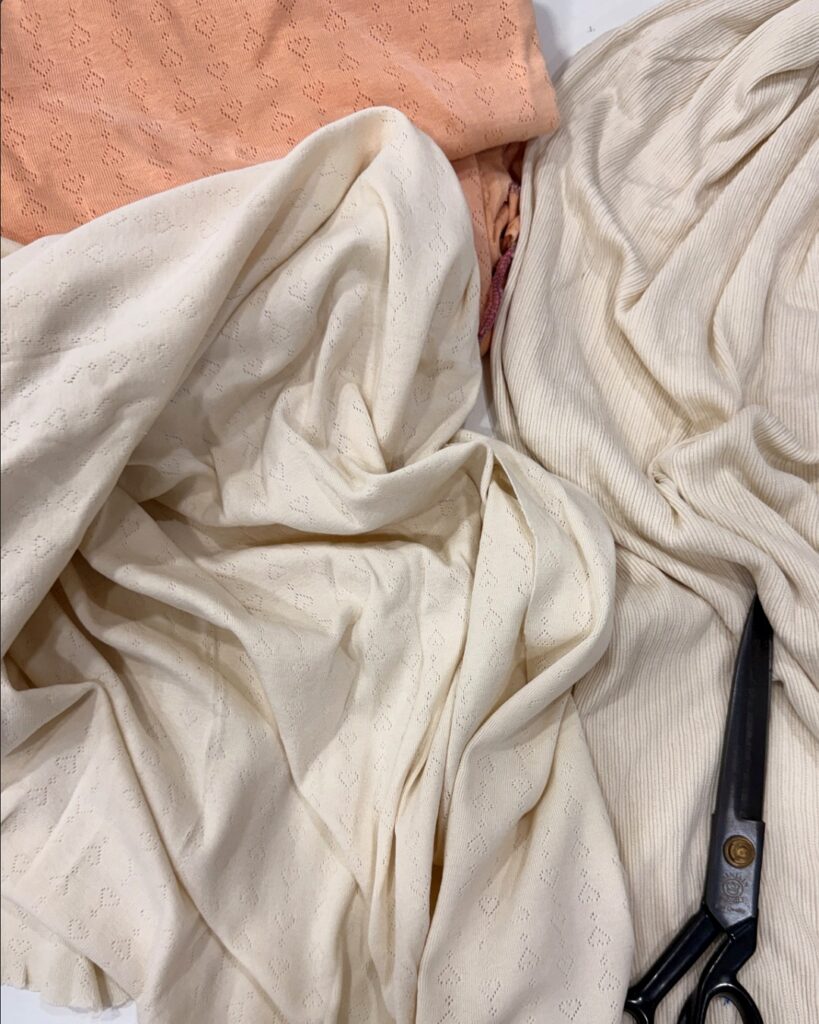
Because 100% cotton doesn’t tell you everything. Two fabrics can both say 100% cotton and feel completely different. The yarn, knitting structure, density, stretch and finishing all change what eventually touches the skin.
Because 100% cotton doesn’t tell you everything.
Two fabrics can both say 100% cotton and feel completely different.
The yarn, knitting structure, density, stretch and finishing all change what eventually touches the skin.
We tried multiple structures, from ribs to Jacquards. They looked great as fabrics, but our wearer trials told us otherwise.
So we kept developing.
For the boys, we chose a soft waffle-inspired knit. For the girls, tiny pointelle hearts gave us something playful without prints or colour.
Because children’s underwear can be simple without feeling boring.
Made for comfort. With just enough fun built into the knit.
We Tried Colour. Then Chose Not to Use It.
Undyed, by choice. We didn’t begin with an undyed collection. We experimented with natural dyes and developed samples because colour felt like the obvious way to make children’s underwear more playful.
Undyed, by choice.
We didn’t begin with an undyed collection.
We experimented with natural dyes and developed samples because colour felt like the obvious way to make children’s underwear more playful.
Then we washed them.
Natural dyeing is more complicated than it sounds. Colour fastness can vary, particularly on cotton, and achieving better fixation can require additional pretreatments or mordants.
Our samples weren’t giving us the consistency we wanted.
And somewhere along the way, we realised we were adding colour simply because children’s clothing is expected to have it.
So we asked ourselves:
Does it actually need it?
For this collection, the answer was no.
Undyed cotton became part of the design, not something missing from it.
Then We Looked at the Tiny Things
Labels, seams and even the thread. A child rarely tells you, “This seam is irritating me.” They tug. Scratch. Adjust. And keep playing.
Labels, seams and even the thread.
A child rarely tells you, “This seam is irritating me.”
They tug. Scratch. Adjust. And keep playing.
So we started paying attention to the details nobody really sees.
Take the label. Instead of stitching it deep into the garment and leaving a scratchy edge when it is cut, ours is attached by small single stitch so a parent can simply cut the stitch and take the label away.
Then, of course, we looked at the sewing thread. Rather than automatically using the synthetic thread commonly found in apparel production, we chose cotton thread wherever our construction allowed it.
Tiny details?
Absolutely.
But this garment is made almost entirely of tiny details.
We Changed the Shape
Designed around movement, not a hanger. Our first prototype looked much more like a conventional brief. Then the children wore it.
Designed around movement, not a hanger.
Our first prototype looked much more like a conventional brief.
Then the children wore it.
We watched edges ride upwards, fabric shift during play and certain areas experience more rubbing than we liked.
So we went back to the pattern.
Repeated friction – especially around moisture centric areas such as the inner thighs and, contributed to chafing and skin irritation.
Our answer was a longer short-style silhouette designed to offer more coverage and fewer exposed areas for rubbing.
There was another reason too: privacy.
Children run, climb, tumble and sit however they please.
Their first layer should let them.
Tested on Children. Not Just on a Table.
Wear. Wash. Change. Repeat. Fabric can look perfect in a development room. A pattern can look perfect on paper. Neither tells you what happens after six hours of being a child.
Wear. Wash. Change. Repeat.
Fabric can look perfect in a development room.
A pattern can look perfect on paper.
Neither tells you what happens after six hours of being a child.
So we made wearer trials part of our development.
We watched. We washed. We changed patterns. We rejected fabrics that looked good but didn’t feel right. We tried colour, then removed it. We changed a perfectly normal underwear shape because the children told us—without actually telling us—that we could do better.
They weren’t simply the inspiration behind Moss & Loom.
They helped us develop it.
Finally, the Packaging Had to Make Sense
Small batches. Less plastic. Less excess. After questioning what went into the garment, wrapping every piece in unnecessary plastic didn’t make much sense to us. So we chose recycled-paper packaging.
Small batches. Less plastic. Less excess.
After questioning what went into the garment, wrapping every piece in unnecessary plastic didn’t make much sense to us.
So we chose recycled-paper packaging.
And we chose small batches.
Rather than manufacturing huge quantities simply to keep stock sitting on shelves, we’d rather make thoughtfully, learn what parents actually want and make again.
It means less excess product and less unnecessary packaging.
Does recycled paper make our organic cotton underwear softer?
No.
It simply tells you we applied the same thinking to the box as we did to what went inside it.
Simple, on Purpose.
Great things begin with thoughtful choices.
Moss & Loom came from choosing differently. From the fibre to the knit, from the shape to the stitch.
We thought carefully about every little detail. What we added, and what we deliberately left out.
Because something that sits closest to a child’s skin every day deserves a little more thought.